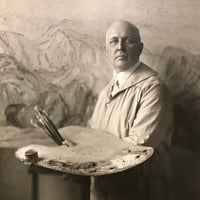
Birger Sandzen
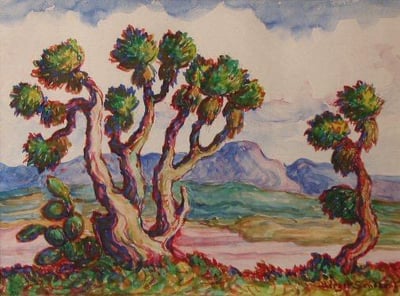
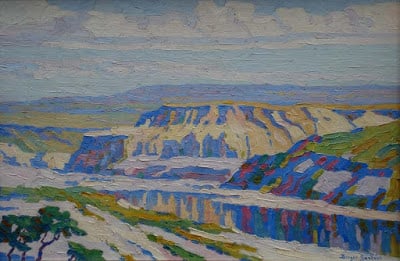
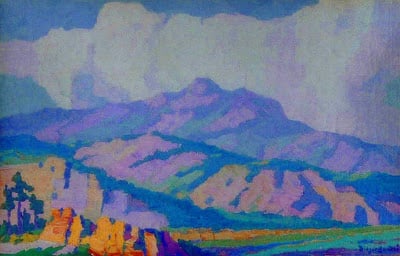
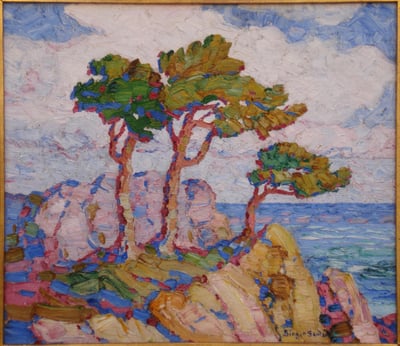
Birger Sandzén (1871–1954) first visited New Mexico in 1918 and quickly became a frequent guest in Santa Fe and Taos, where he was elected an associate member of the prestigious Taos Society of Artists in 1922. Dubbed the "Van Gogh of the West," Sandzén strayed from muted tonalism in favor of a dynamic Post-Impressionist and Fauvist style. His landscapes are defined by an incredibly thick, sculptural impasto and a brilliant, highly expressive color palette that captured the raw majesty of regional canyons and mountain peaks. An influential educator and co-founder of the Prairie Print Makers, his progressive vision permanently expanded the boundaries of traditional Western landscape painting. He stands out as a visionary, transformative force who brought a radical, energetic aesthetic to the documentation of the American West.
Born in Sweden, Sandzén underwent rigorous classical training in Stockholm under Anders Zorn and later in Paris before immigrating to Kansas in 1894 to join the faculty at Bethany College. However, his artistic evolution reached its zenith during his travels through the Southwest and Rocky Mountains.
Today, his masterpieces are highly coveted by fine art collectors and are found in the celebrated collections of the Art Institute of Chicago and the National Museum of Stockholm.