Cady Wells
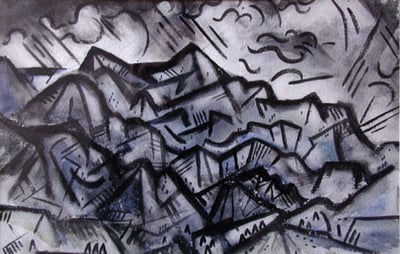
Cady Wells (1904–1954) was a transformative figure in American modernism who masterfully channeled the rugged essence and spiritual depth of the Southwest into groundbreaking avant-garde art. Born into a wealthy New England family, Wells permanently relocated to New Mexico in 1932, a pivotal move that deeply reshaped his creative trajectory. Entranced by the dramatic vistas, stark light, and rich cultural tapestry of the high desert, he settled in the historic village of Jacona, near Santa Fe. His intimate immersion into Western life went far beyond casual observation; he deeply absorbed the regional aesthetic, collecting traditional Spanish colonial santo carvings and Navajo textiles. Encouraged by legendary artist Andrew Dasburg and championed by Georgia O'Keeffe, Wells rejected conventional, romanticized depictions of the frontier. Instead, he pioneered a highly individualistic, calligraphic style using layered watercolors to expose the raw, geologic bones of the desert landscape. His powerful abstractions captured the ancient, spiritual, and often turbulent forces beneath the Southwestern terrain. Today, Wells is celebrated as a visionary master who successfully bridged European modernism with the authentic soul of the American West, cementing his legacy in the canon of historic Western art.