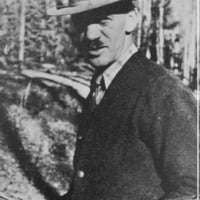
E. Martin Hennings
Ernest Martin Hennings (1886-1956)
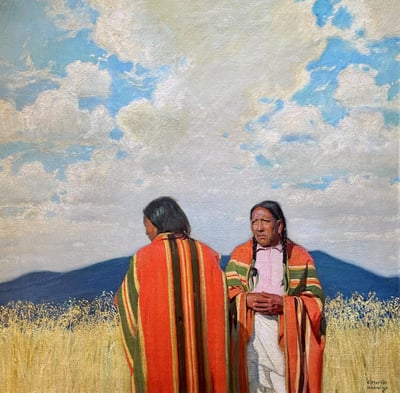
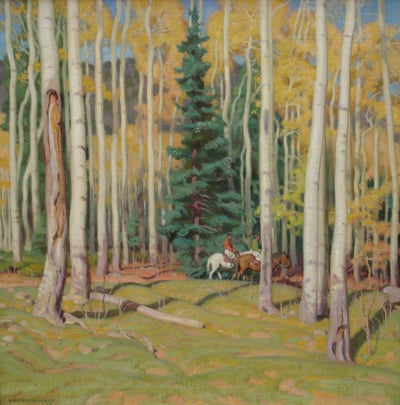
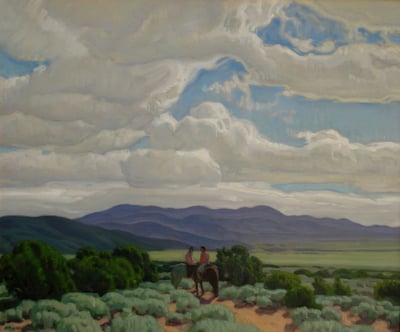
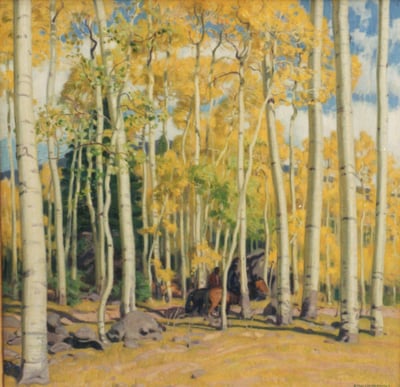
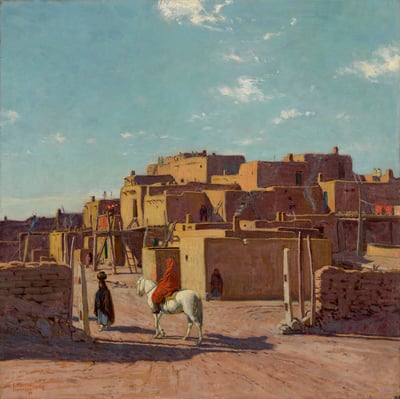
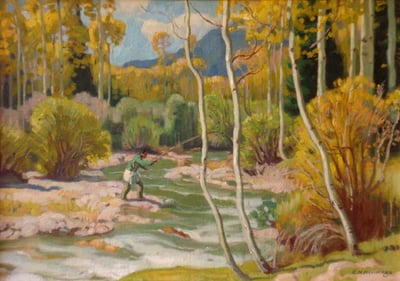
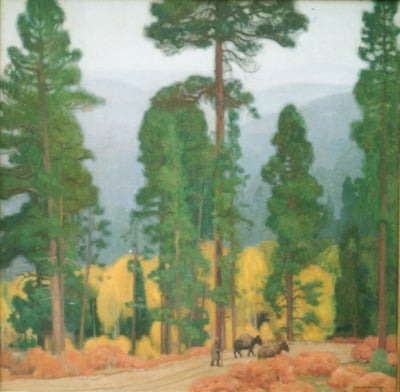
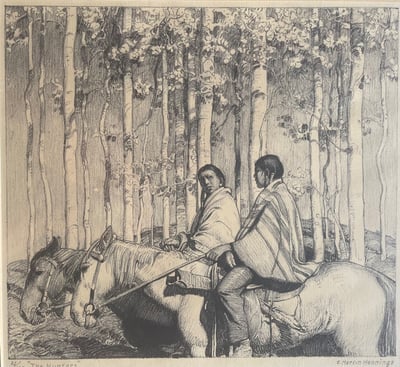
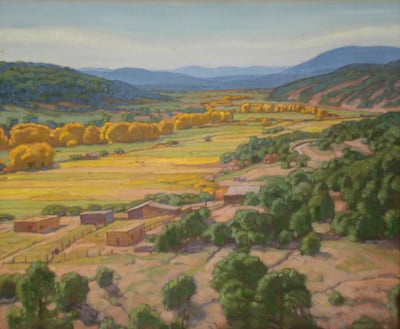
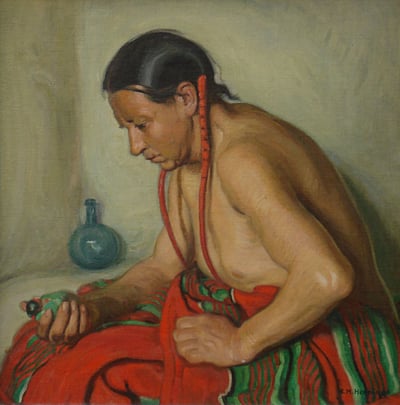
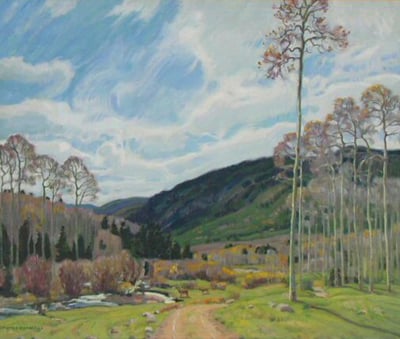
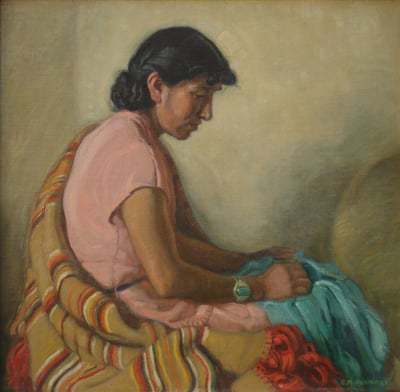
E. Martin Hennings first visited Taos in 1917 on a three month painting trip sponsored by Carter Harrison from his native Chicago. His art nouveau-inspired impressionism, often showing Taos Indians riding through the aspens, has made his work one of the most sought-after of the Taos Society of Artists members.
Born to German immigrant parents, the Hennings family settled in Chicago when E. Martin was just an infant. The burgeoning lakeside city offered young boy an ideal setting in which to embark on his artistic path.
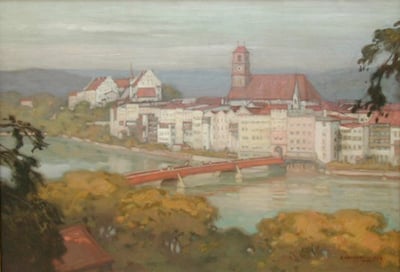
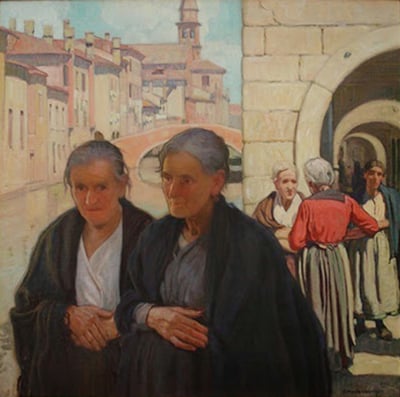
Consequently, Hennings enrolled in the School of the Art Institute of Chicago from 1901-1906, and the firm foundation in drawing that the school provided remained a hallmark of Hennings' work. The artist first gained recognition as a freelance muralist and illustrator, but quickly tired of commercial art. In 1912, Hennings garnered a second place prize for a piece that he entered in the Prix de Rome. This success became the impetus to move to Munich to study at the Royal Academy. While in Europe, Higgins also met Walter Ufer and Victor Higgins, with whom he would rejoin in Taos, NM, five years later.
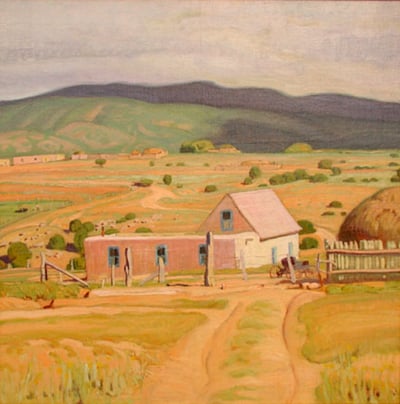
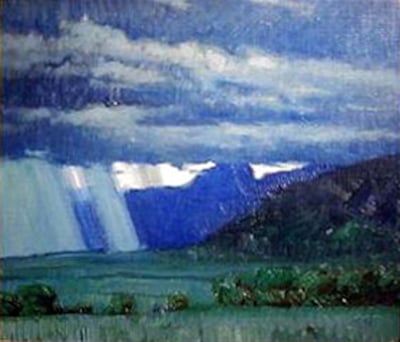
It was during Hennings' return to Chicago where he would obtain the attention and financial sponsorship of art patron and former city mayor, Carter Harrison. It was agreed that young artist would spend time in Taos, NM, in exchange for whatever paintings the artist could produce of the region. Hennings always stated that he preferred figure painting, although the landscape of Northern New Mexico proved irresistible and Taos helped to expand the painter's repertoire. In 1924 Hennings gained membership in the Taos Society of Artists, and found the scope of his exhibitions growing to include a broader, national market, He became an artist whose significance helped to establish Taos as an important American art colony.
Currently Available
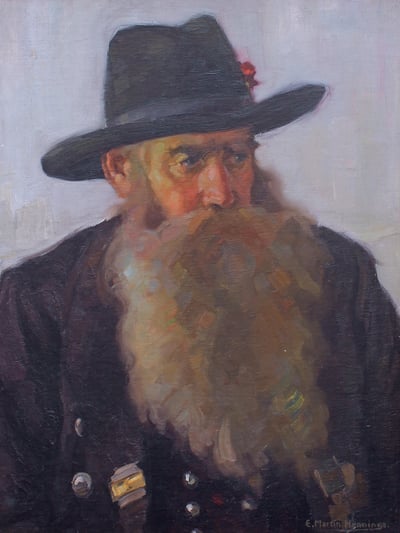
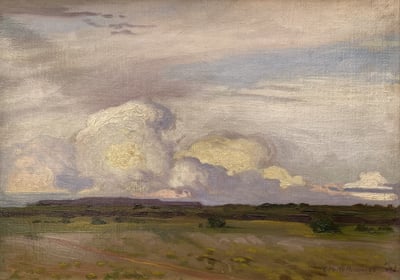
Past Works