Ted Egri
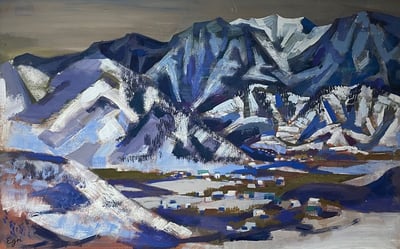
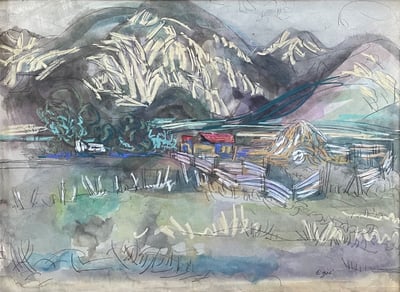
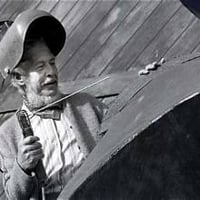
Ted Egri (1913–2010) is celebrated as a defining cornerstone of mid-century Southwestern avant-garde art, famously coining the term “Taos Moderns” to anchor a radical new artistic movement. He remains highly collectable for his pioneering ability to translate the raw, geometric energy of the desert landscape into bold abstract expressionism and cubist-influenced sculpture. Driven by the majestic presence of the Sangre de Cristo Mountains, Egri broke away from traditional Western regionalism to forge a distinct style marked by dynamic symmetry and profound spatial depth. His multi-media masterworks—ranging from powerful bronze and welded steel sculptures to fluid, vibrant paintings—are highly coveted centerpieces in private collections worldwide.
Born in New York City to Hungarian immigrant parents, Egri’s formal art training began in early childhood before he went on to serve as a Navy cartographer during World War II. His wartime observations deeply informed his early work, but his artistic trajectory transformed forever when he relocated to Taos, New Mexico, in 1950. Immersing himself in the local tri-cultural community, Egri became a fierce advocate for public art and an influential educator. Today, his visionary legacy stands as a vital, foundational bridge between East Coast modernism and post-war Western abstraction.