E. L. Blumenschein
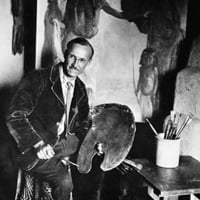
Ernest Leonard Blumenschein (1874-1960)
In 1898, Ernest Blumenschein and his friend Bert Phillips went west on a painting trip. When a broken wagon wheel stranded the artists in the mountains north of Taos, Blumenschein carried the wheel into town for repair. What he and Phillips found there changed both their lives. Phillips decided he had reached the end of his journey. Blumenschein spent the next two decades finding his way back. He helped found the Taos Society of Artists in 1915 and settled in Taos permanently in 1919.
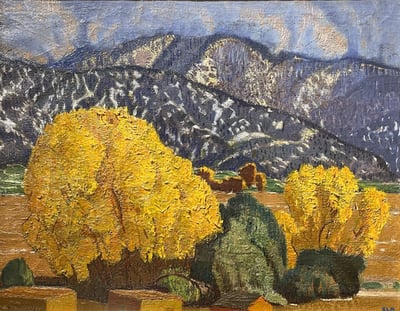
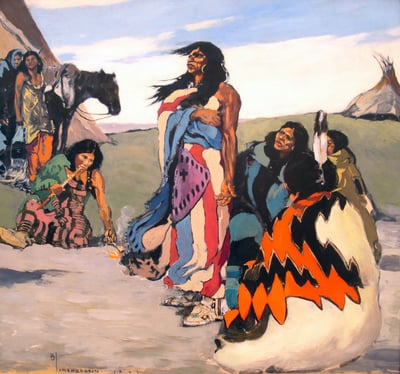
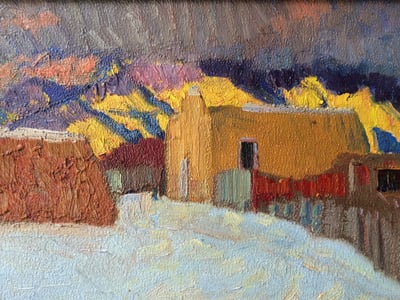
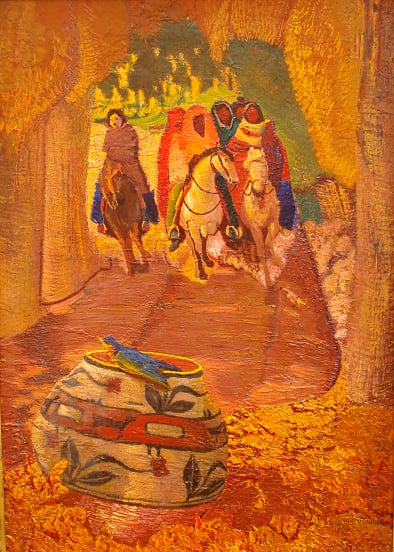
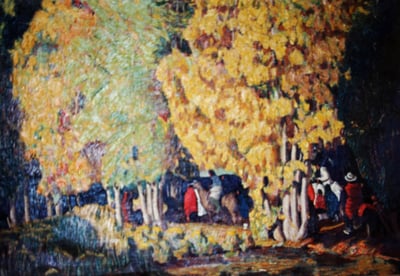
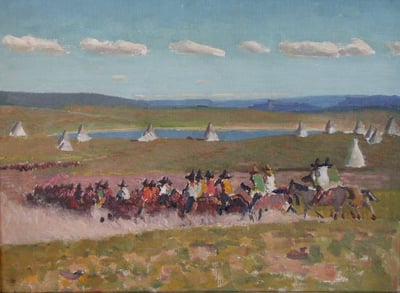
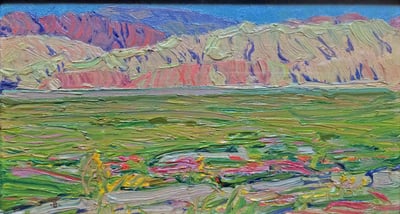
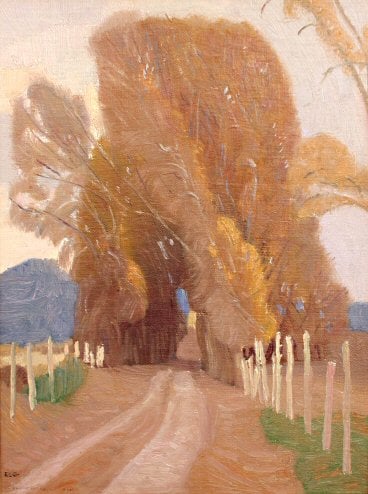
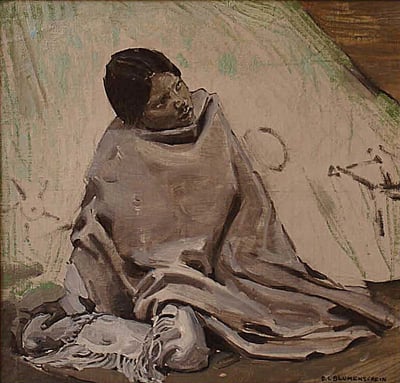
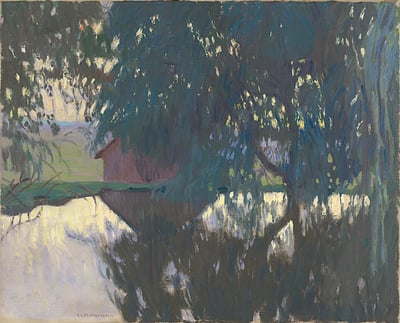
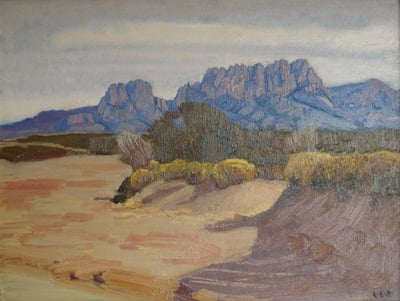
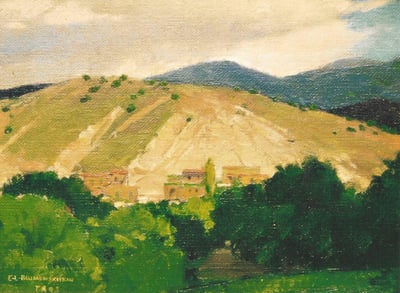
A colorful figure whose character was marked by fierce determination, Blumenschein was a supporter of Post-Impressionism. He developed a style defined by deep, rich colors and a strict sense of spatial geometry and rhythm. Possibly the most complex and least understood member of the Taos Society, Blumenschein painted southwestern pictures born of his interest in formal integrity and harmony rather than a desire to accurately portray Pueblo culture.
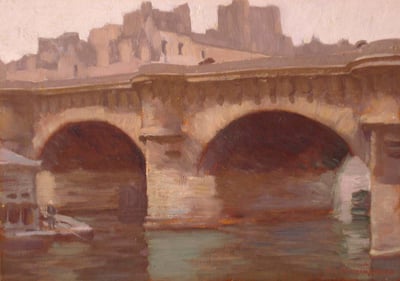
Similar to several of his later Taos colleagues, Blumenschein was of modest Midwestern beginnings. He was born in Pittsburgh, Pennsylvania, and raised in Dayton, Ohio. After graduating from high school, he earned a scholarship to study violin at the Cincinnati College of Music. He took an illustration class at the Cincinnati Art Academy and decided to pursue a career in the visual arts. In 1892, he moved to New York to study at the Art Students League. He soon became convinced that European study was necessary to establish himself as a professional artist and enrolled at the Académie Julian in Paris. There he became acquainted with Bert Phillips and J.H. Sharp, who regaled the younger artists with tales of his 1893 visit to Taos.
Upon his return from Paris in 1896, Blumenschein worked as an illustrator in New York, where he shared a studio with Phillips. An assignment took him to Arizona and New Mexico, and in 1898 he went west with Phillips on the trip that brought them to Taos. Blumenschein stayed for three months before returning to his lucrative illustration career in New York, and in 1899 he went back to Paris for further study at the Académie Julian. In Paris he met the painter Mary Shepard Greene, an established artist whose work was often featured in the annual Salon. They married in 1905.
After their return to New York in 1909, the couple worked as an illustration team, and Blumenschein taught at the Art Students League. He began spending his summers in Taos and settled there permanently in 1919. Blumenschein painted in Taos for the rest of his career and died in 1960. The family home on Ledoux Street is now the Blumenschein Home & Museum, open to visitors a few blocks from the gallery.
Parsons buys and consigns works by Ernest L. Blumenschein. If you have a painting or drawing by him, from a collection or a family estate, we’d be glad to talk.