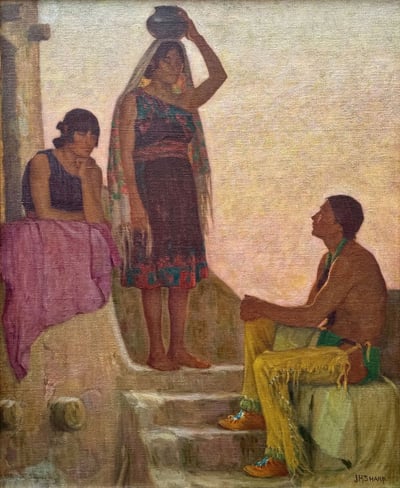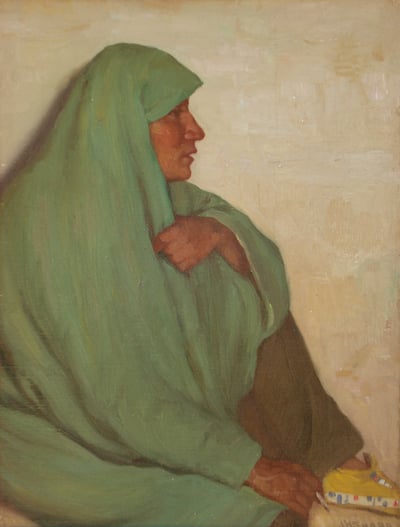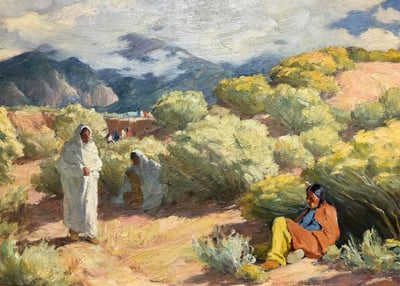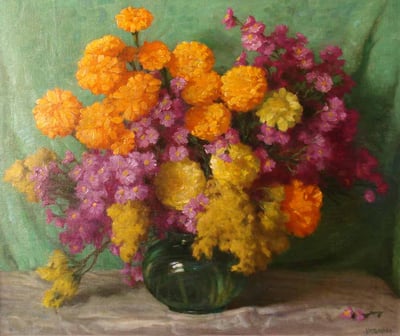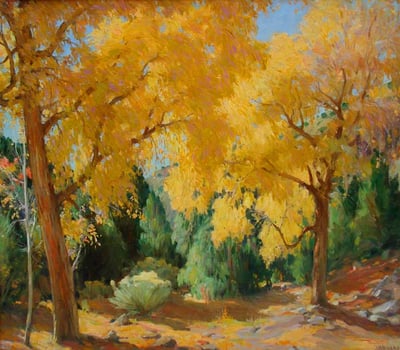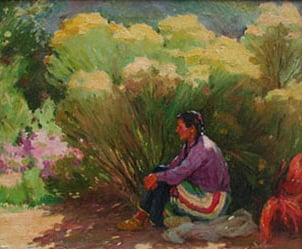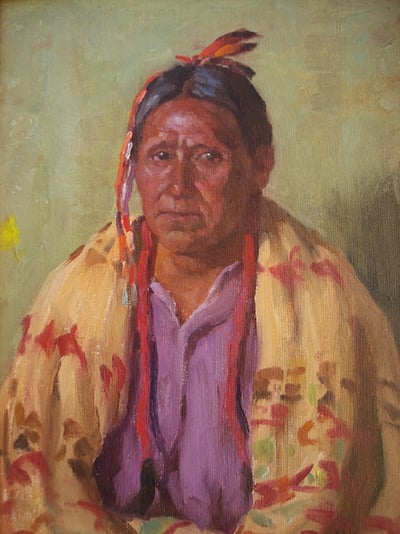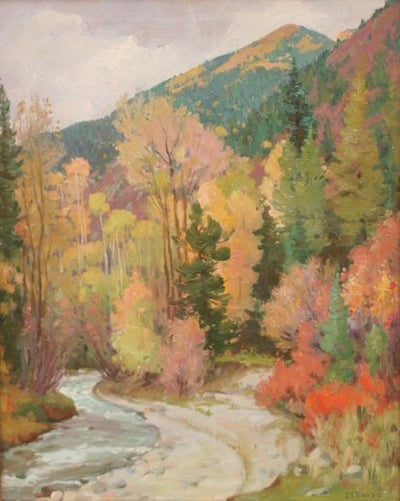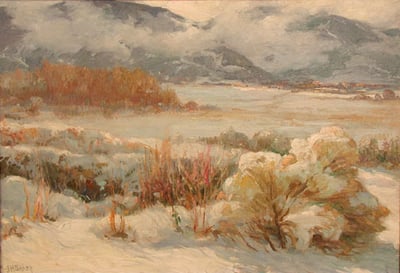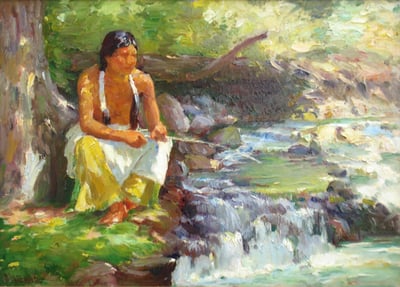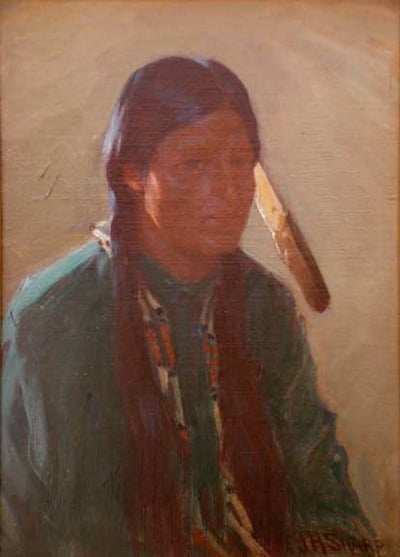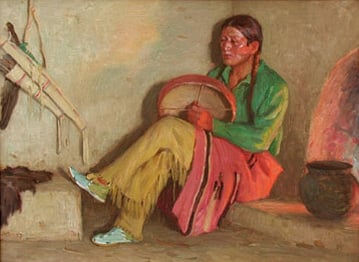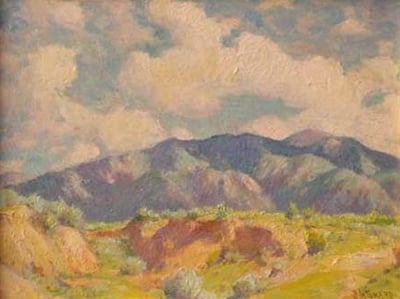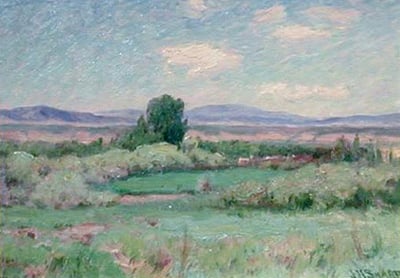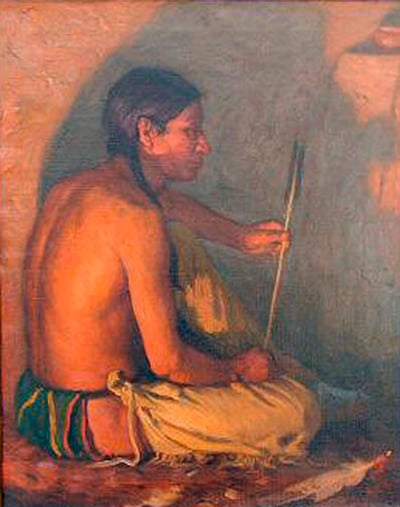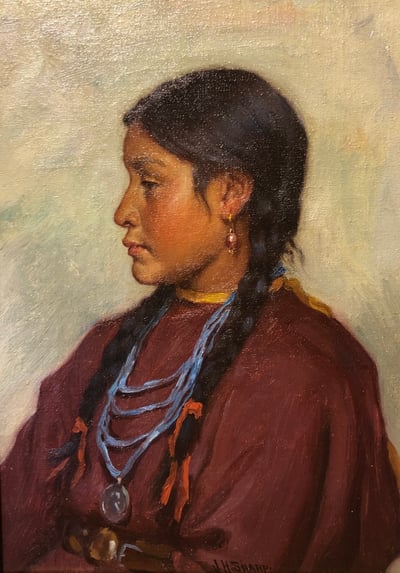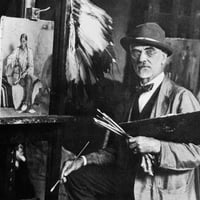
J. H. Sharp
Joseph Henry Sharp (1859-1953)
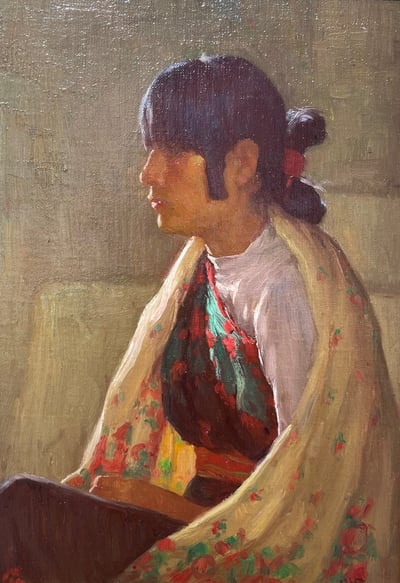
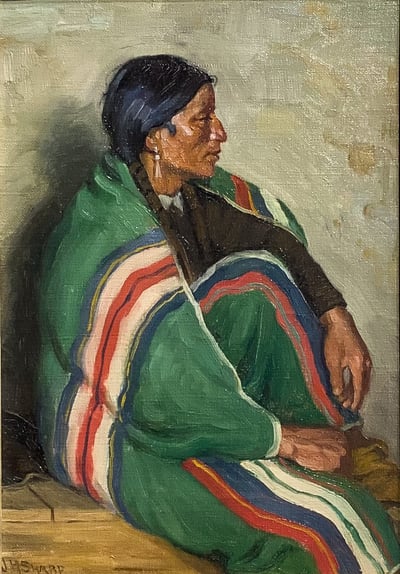
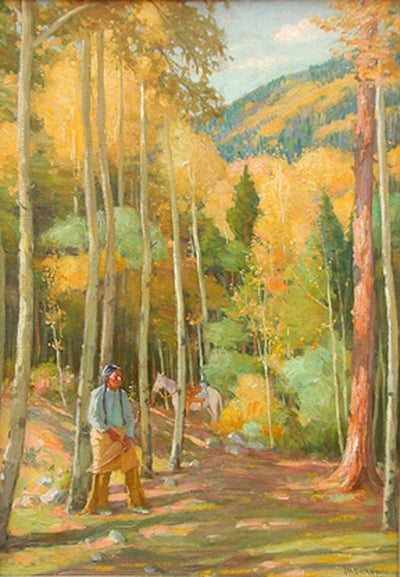
J.H. Sharp was the first of the Taos Society of Artists to visit Taos, coming in 1893. This early trip became a pivotal moment in the future of Taos, as Sharp's Paris description of the exotic New Mexican village to fellow Academie Julian students, Ernest Blumenschein and Bert Phillips, would influence their decision to visit Taos and lead to the forming of Taos as an art colony.
Born in Bridgeport, Ohio, Sharp was interested in art from an early age. After gradually losing his hearing from a swimming accident, traditional schooling became increasingly difficult, and at fourteen he moved to his aunt's house in Cincinnati, OH, to work while enrolling part-time in art classes at Mickmicken School of Design and the Cincinnati Art Academy. His father's unexpected death when Joseph was just twelve had also precipitated the move, and the youth sent most of his earnings back to his mother. After eight years, Sharp finally saved enough money to travel to Europe to study at the Antwerp Academy and the Academie Julian.
Following his education in Europe, Sharp returned to Ohio where he took a teaching position at the Cincinnati Art Academy and established himself as a prominent portraitist. 1883 marked Sharp's first trip to New Mexico and the American Southwest, although he did not visit Taos. Later, in 1893, he received a commission from Harper's Weekly to paint life within the Taos Pueblo, and his work was very well received. Still feeling like his education was incomplete, he returned to Paris for two years where he met with Blumenschein and Phillips and delighted them with stories and paintings of Taos and of the American West. Sharp also befriended E.I. Couse in Paris, who was similarly affected by the young artist's tales and pictures of a fascinating land.
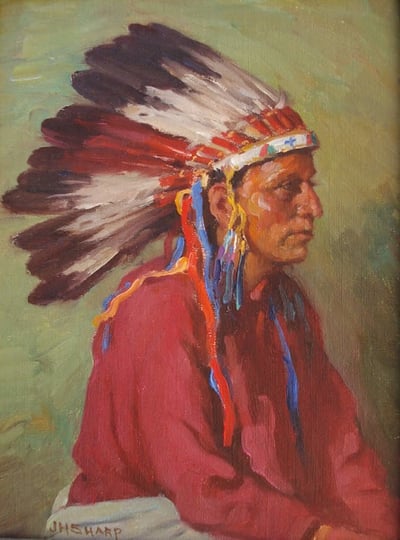
Upon his return to the States, Sharp continued his teaching, worked as an illustrator, and spent time in Montana painting the Plains Indians. 1900 marked a critical year for Sharp's career, as some of these Plains Indians portraits were exhibited in Paris and Washington, D.C., gaining the attention of Theodore Roosevelt. Roosevelt soon commissioned the artist to paint some 200 portraits of the survivors of the Battle of Little Bighorn, and Sharp and his wife settled in a studio / cabin at a river juncture near the famous battle site. Just two years into his Plains painting venture, Phoebe Hearst (mother of William Randolph Hearst) bought 80 works, giving the artist financial independence and the ability to paint full-time.
New Mexico continued to seduce Sharp, and he and his wife spent some of their summers in the familiar mountainous desert. By 1910, the lure of the southwest was too great, and the couple relocated to Taos permanently. In 1915, Sharp also became a charter member of the Taos Society of Artists, where he was known for his patience, wit, and spiritual depth. By all accounts, Sharp had achieved great success during his illustrious career, and continued to paint and travel the world well into his 80s. Just four years before his death, the Gilcrease Museum in Tulsa, OK, honored Sharp with an exhibition of his work in 1949, a celebration of a man whose artistic acuity and drive for preservation should long be remembered.
Currently Available
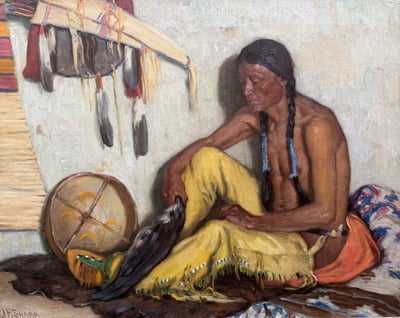
Past Works