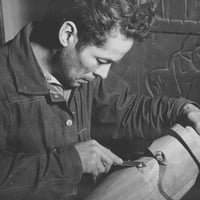
Patrociño Barela
Patrociño Barela (c. 1900–1964) was a master self-taught woodcarver who fundamentally reshaped 20th-century Hispanic and American modernist art. Based in Taos, New Mexico, Barela emerged from a background as an itinerant migrant laborer to become the first Mexican-American artist to receive national acclaim.
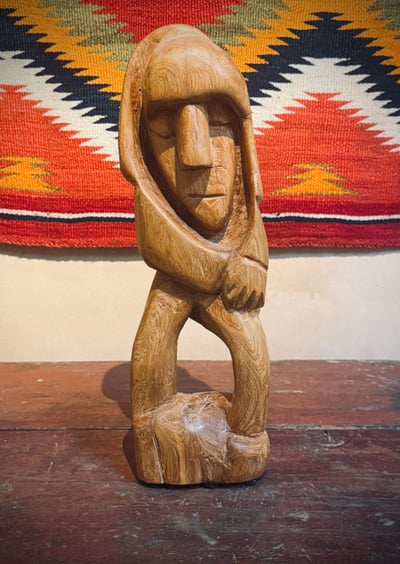
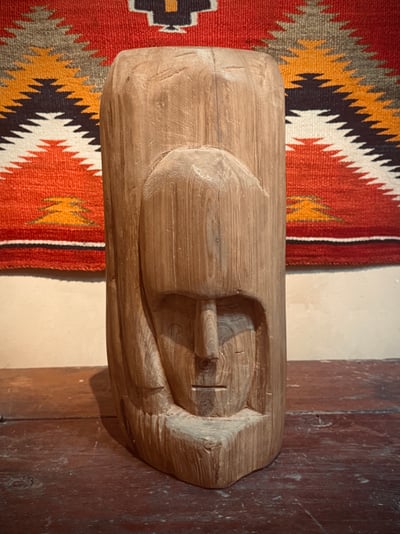
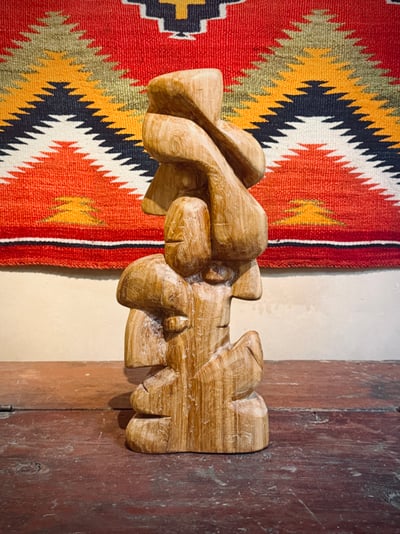
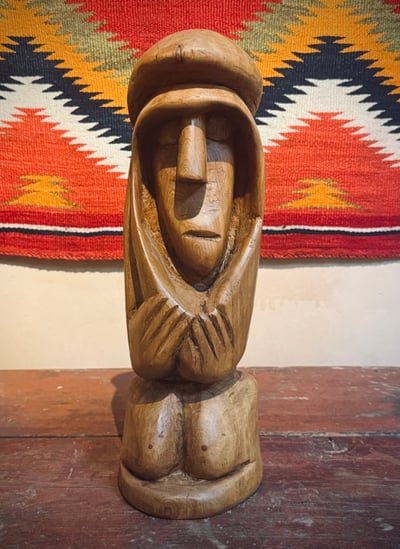
Barela began carving in 1931, initially repairing a traditional Catholic devotional figure (bulto). However, his vision quickly evolved past standard religious icons. Working with local, unpainted woods like juniper and pine, he carved highly stylized, organic, and fluid sculptures directly out of single blocks of wood. His deeply spiritual compositions navigated both biblical themes and universal human conditions, emphasizing family, aging, and existential struggle. This unique blend of traditional santero heritage and avant-garde abstraction drew comparisons to European modernists like Henry Moore.
His genius was recognized by the Works Progress Administration’s Federal Art Project (WPA/FAP) in the mid-1930s. This culminated in his landmark inclusion in the Museum of Modern Art’s (MoMA) 1936 exhibition, New Horizons in American Art, where Time magazine celebrated him as the "Discovery of the Year". Today, his iconic works are preserved in institutions like the Smithsonian American Art Museum and the Harwood Museum of Art in Taos.